Melbourne · travertine beside water
Travertine Pool Paving Melbourne
People pick travertine for colour and modular packs, but beside a pool it comes down to finish, sealing and how neatly it meets coping and drains. Warm tone alone won’t handle chlorine splash or slippery shade in winter.
Whether you searched travertine pool surrounds Melbourne or non slip travertine pool pavers, shortlist finishes with ratings and maintenance you will actually run—then align falls and rebates before you order packs.
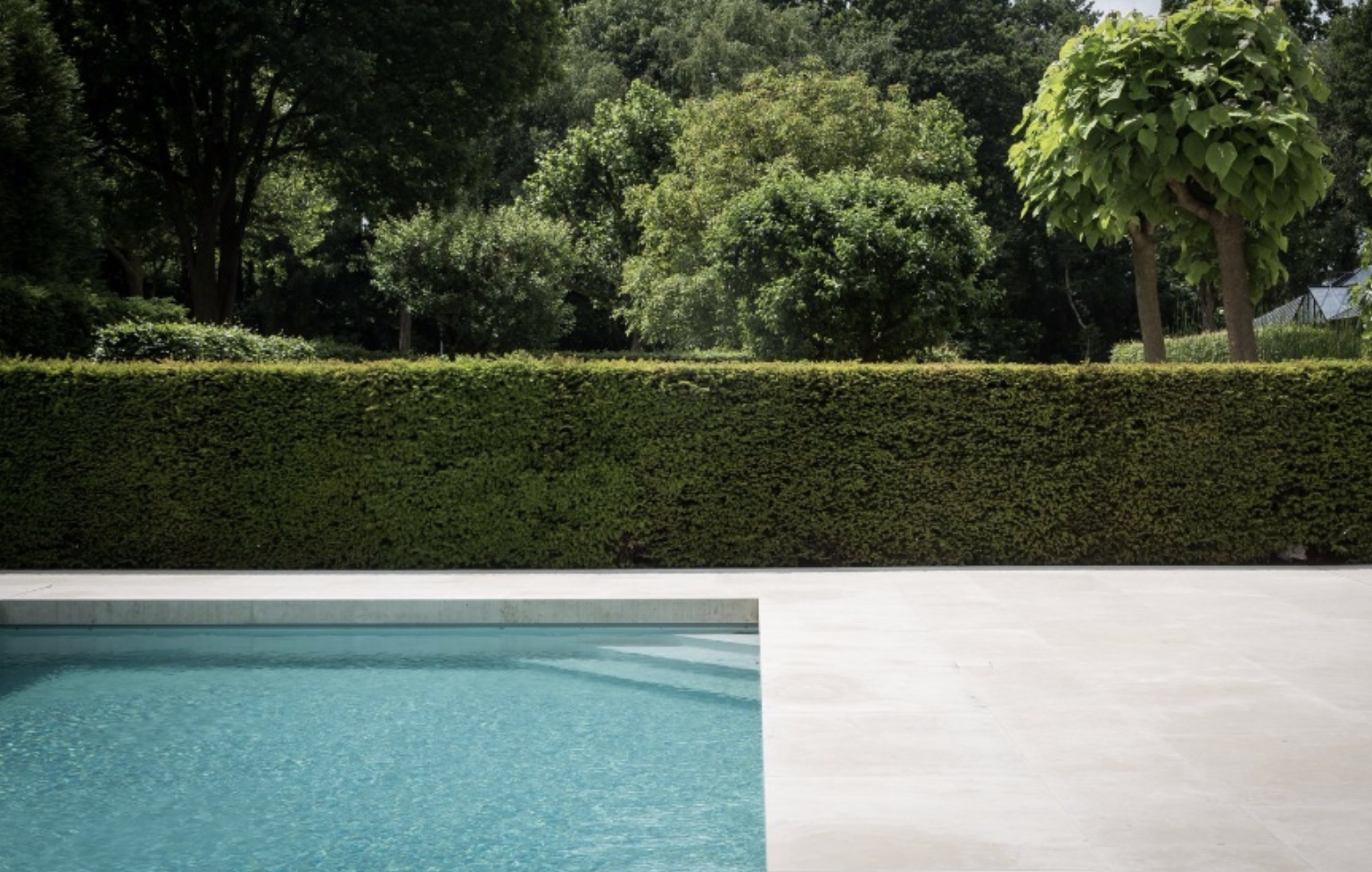
Does travertine earn its place beside a pool?
Travertine is popular around pools in Melbourne for reasons that are partly aesthetic and partly practical: modular stone packs suit large surrounds, and many homeowners prefer the organic variation of natural stone to uniform concrete modules.
- Natural texture — Veining and pitting can read relaxed beside water; filled or unfilled detail changes both appearance and cleaning.
- Comfort underfoot — Compared with some darker or harder stones, travertine is often described as more forgiving for bare feet—though heat and finish still matter in summer.
- Finish selection matters — The same stone family can present very differently as honed, brushed, tumbled or filled surfaces, with implications for grip and maintenance.
- Not all travertine is equal — Density, fill quality, calibration and batch consistency vary by grade and supplier.
- Quality is systemic — Outcomes depend on stone selection and accurate falls, bedding, cuts at the pool edge, coping junctions and sealing decisions working together.
What affects travertine pool paving cost?
Travertine pool paving cost is the full job—stone is one line. Without a site measure and written scope, headline rates rarely match your pool surround.
- Area size Larger surrounds increase material volumes; narrow strips around tight pool perimeters can still be labour-intensive.
- Stone grade and thickness Structural expectations, handling weight and breakage rates follow from the product tier you specify.
- Coping detail Bullnose, rebated units and clean junctions to fencing or decking add setting-out time and tolerance checks.
- French pattern vs large format Mixed modules demand disciplined repeats; large units telegraph level errors and may change wastage patterns.
- Concrete base or wet bed requirements Engineering, substrate movement and drainage paths steer whether you work on a slab/adhesive system or a mortar bed—see our wet bed vs concrete base paving comparison.
- Cuts around pool edges Radii, tight corners and step returns consume labour even when the stone itself is mid-market.
- Drainage and falls Sheet falls, strip drains and grate positions must align with the pool shell, fencing and certifier expectations.
- Site access Side paths, steps and protection of existing finishes add daily barrow time.
- Sealing requirements Product choice, timing and reapplication cycles belong in the conversation when natural stone meets splash exposure.
For how Melbourne quotes are typically structured across paving types, read our paving cost Melbourne guide—then use the paving cost calculator for a planning bracket.
Travertine beside water: strengths and trade-offs
Pros
- Natural, premium appearance that pairs well with water and landscaping
- Often described as comfortable underfoot compared with some darker or harder stones
- Works visually with planting, timber decks and rendered architecture when tones are coordinated
- Suits French pattern and modular layouts common on larger pool decks
- Strong lifestyle appeal when detailing and maintenance are aligned with the brief
Cons
- Quality varies significantly between grades, suppliers and batches
- Can mark, etch or weather unevenly if poorly selected or maintained
- Sealing and cleaning advice matters—there is no one-size-fits-all maintenance card
- Poor drainage or falls can expose staining, efflorescence or algae in low spots
- Budget stone can look inconsistent beside water where every tile is visible
Grip: finishes that survive splash
Pool areas need slip resistance appropriate to bare feet, wet bare feet and realistic Melbourne maintenance—shaded gardens hold moisture and organic growth longer than open decks.
Tumbled or textured finishes may perform differently from tight honed faces under wet test regimes; comfort and grip still need balancing because aggressive textures can catch debris or feel harsh for everyday use.
Treat finish choice as a decision you confirm with samples and professional guidance for your specific product and pool environment—not something inferred from a single showroom tile viewed dry.
Travertine vs porcelain vs concrete beside water
No material wins every brief. Use this table as a balanced shorthand alongside pool paving Melbourne fundamentals—then narrow choices with your contractor on site.
| Material | Pool surround notes |
|---|---|
| Travertine | Modular natural stone with warm tonal variation; finish and batch quality strongly influence wet performance and long-term appearance beside water. |
| Limestone | Often soft and tonally calm; porosity and density vary—supplier guidance on splash exposure and sealing matters as much as colour. |
| Bluestone | Familiar in Melbourne gardens; surface treatments from sawn to flamed change grip, stain behaviour and how formal the surround feels. |
| Porcelain | Consistent calibre and low porosity appeal on paper; grout detail, module size and slip ratings still need pairing to pool rules and maintenance habits—without assuming porcelain always beats stone outdoors. |
| Concrete pavers | Predictable modules and colour ranges; structural and bedding choices still follow loads and drainage. Aesthetic warmth differs from natural stone—preference is valid either way. |
French-pattern travertine
French pattern is a common travertine lay because mixed tile sizes fill big pool decks without a single repeating rectangle. It looks settled when joints stay even and you blend stone batches before you start.
On large surrounds the pattern can settle the space; at the waterline, set-out and batch consistency matter most where cuts meet coping and steps. For more on the pattern, read French pattern paving Melbourne.
Common travertine pool mistakes
- Choosing only by colour — Sample boards under showroom lighting ignore wet sheen, joint shadow and long-term cleaning beside chlorinated splash.
- Using the wrong finish — A face suited to a dry path may be the wrong tool beside active pool use.
- Ignoring slip resistance — Grip needs confirmation for your product and finish, not generic reassurances.
- Poor drainage — Ponding stains coping, encourages algae and undermines confidence in the finish.
- Poor coping detail — Paving that fights the coping line traps water and reads unfinished.
- Inconsistent stone batches — Mixed calibres or tonal jumps read as patch repairs rather than natural variation.
- Not discussing sealing and maintenance — Decisions should follow supplier guidance and realistic habits, not generic internet lists.
When it helps to bring in Made By Mobbs
Pool paving should be considered alongside coping, levels, planting, fencing, lighting and outdoor entertaining—not as an isolated band of stone dropped around the shell.
Made By Mobbs designs and builds complete outdoor spaces so hardscape, planting and circulation read as one scheme rather than competing trades.
Real pricing requires site context: access, demolition, engineering constraints, drainage paths and your material shortlist all move the number. Use the calculator for orientation, then organise a site visit when you are ready to assess the project properly.
Questions we hear on travertine pools
- Is travertine good around pools?
- Travertine is widely used for travertine pool surrounds Melbourne homeowners specify because modular packs suit generous entertaining slabs and the tone sits comfortably beside water and planting. “Good” still depends on finish, wet-area performance expectations, coping detail, drainage and installation quality—travertine is a category, not a single specification.
- Is travertine slippery around pools?
- Not inherently, but finish selection dominates wet grip. Honed surfaces can behave differently from brushed or tumbled treatments; ratings and test methods vary by product and jurisdiction. Treat non slip travertine pool pavers as something you confirm with samples and professional advice for your pool rules and maintenance plan—not assumption from a brochure image.
- Does travertine pool paving need sealing?
- Many travertine installations benefit from informed sealing to slow staining and salt or chlorine ingress, but breathability, product choice and reapplication cycles matter. Porcelain alternatives often need less intervention but swap other trade-offs. Align sealing decisions with supplier guidance and realistic cleaning routines for your travertine paving around pools.
- Is travertine expensive?
- Travertine pool paving cost sits within a wide band: stone grade, thickness, pattern complexity, coping interfaces and hidden preparation usually move the figure more than colour alone. Online figures without site context can mislead—use our paving cost calculator for a guide range, then refine after a walk-through.
- What finish is best for travertine around pools?
- There is no universal winner. Balance appearance, comfort underfoot and slip resistance appropriate to how the pool is used. What feels acceptable on a dry sample may differ beside chlorinated splash and winter algae in a shaded Melbourne garden—shortlist finishes with your contractor and confirm suitability before you lock in supply.
Finish, sealing cadence and coping geometry change every quote—colour chips don’t capture that work.
Planning travertine pool paving?
Use the calculator with realistic deck scope, then confirm wet-area finishes and junction detail on site before packs are locked.
Estimate travertine pool paving cost