Driveway paving guide

Driveway Paving Melbourne

Driveway paving needs to do more than look good. Vehicle loads, drainage, edge restraint and base preparation all affect long-term performance. This guide explains the main paving options, common mistakes and what influences driveway paving costs in Melbourne for a typical paved driveway Melbourne project.

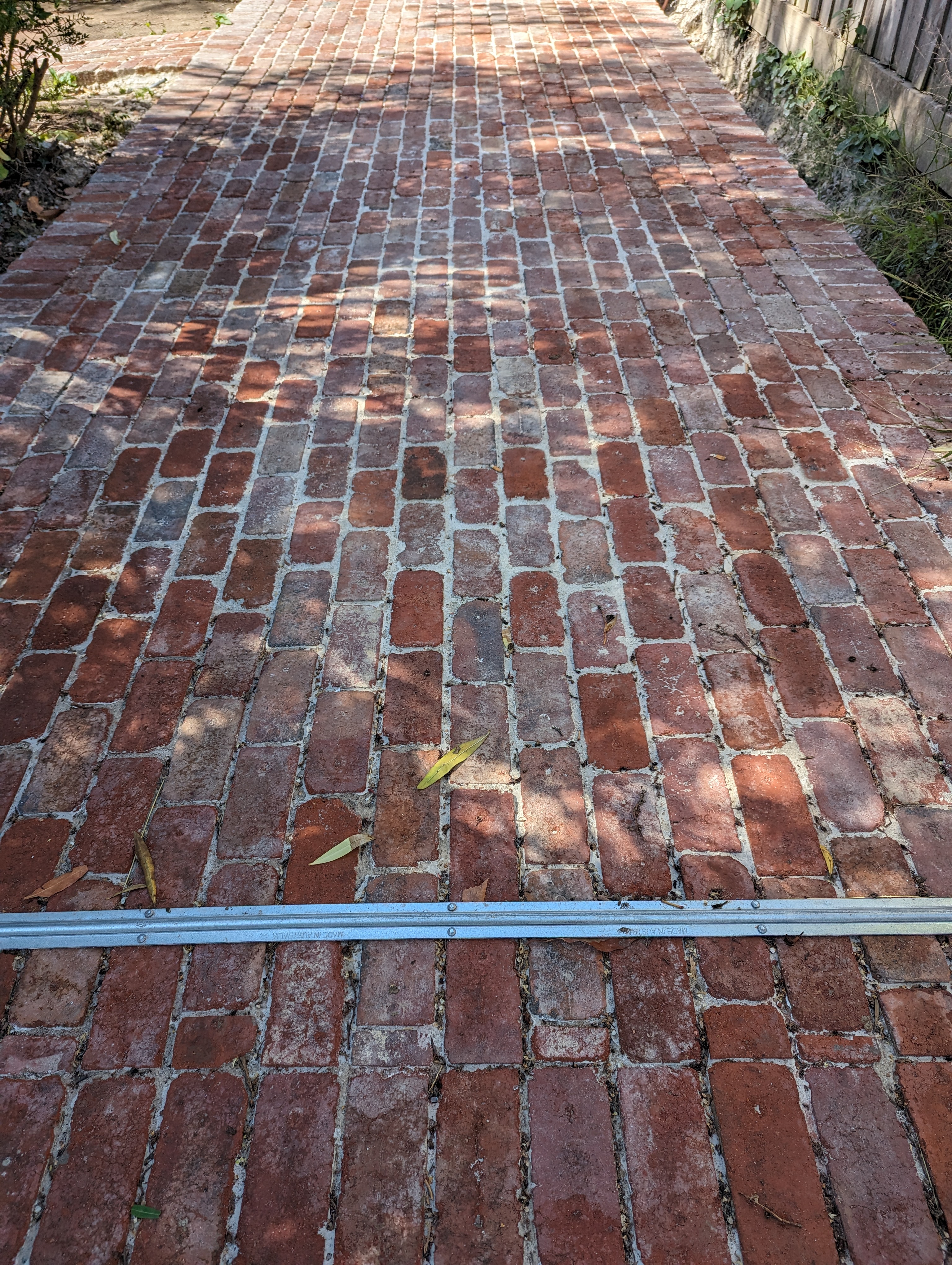
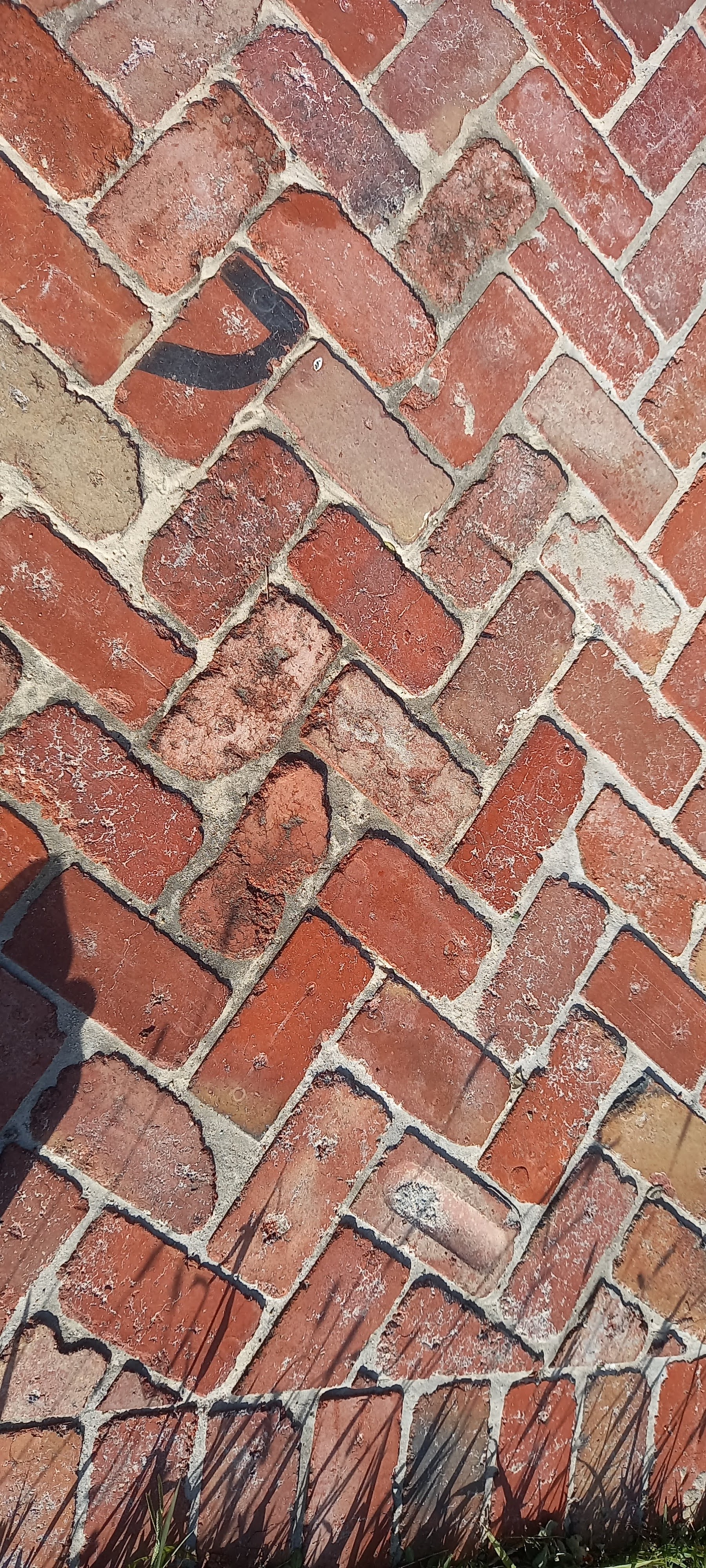
Herringbone driveway paving in Melbourne residential property

What makes driveway paving different?

A path that only sees foot traffic can sometimes tolerate lighter build-ups. A paved driveway Melbourne installers quote on is a working pavement: tyres scrub at turns, water has to leave the surface, and the edges want to spread unless they are tied in properly.

  • Vehicle loads — Static parking weight, slow steering inputs and delivery vans all test the pavement differently from a garden path.
  • Movement — Tracking forces try to push courses sideways; bond lines and restraint detail matter more than on decorative foot traffic areas.
  • Drainage requirements — Sheet flow must clear garage thresholds, letterboxes and neighbouring properties; low spots show up quickly under headlights after rain.
  • Stronger base requirements — Depth, compaction and layer quality carry the load; thin or poorly compacted bases telegraph through as dips, steps and joint opening.
  • Edge restraint importance — Kerbs, haunching or concealed profiles stop lateral creep where the pavement is open to garden or lawn.
  • Turning areas and access — Radii, crossover levels and how vehicles approach the garage set practical constraints on module size and joint layout.

Popular driveway paving styles

Each layout below is widely used on residential driveways. Suitability still hinges on unit thickness, bedding specification and drainage—think of these as design directions, not shortcuts past proper preparation.

  • Herringbone

    Herringbone driveway paving interlocks rectangular units so joints do not run in long continuous lines. It reads classic with brick driveway paving and suits many Melbourne vernacular façades; set-out and borders take more care than a plain grid.

  • Stretcher bond

    Courses stepped in half-bond read calm and contemporary on larger concrete modules. Structurally acceptable for driveways when edges are restrained and pavers are rated for wheels—just avoid treating it as the “cheap” option if the base still needs full depth.
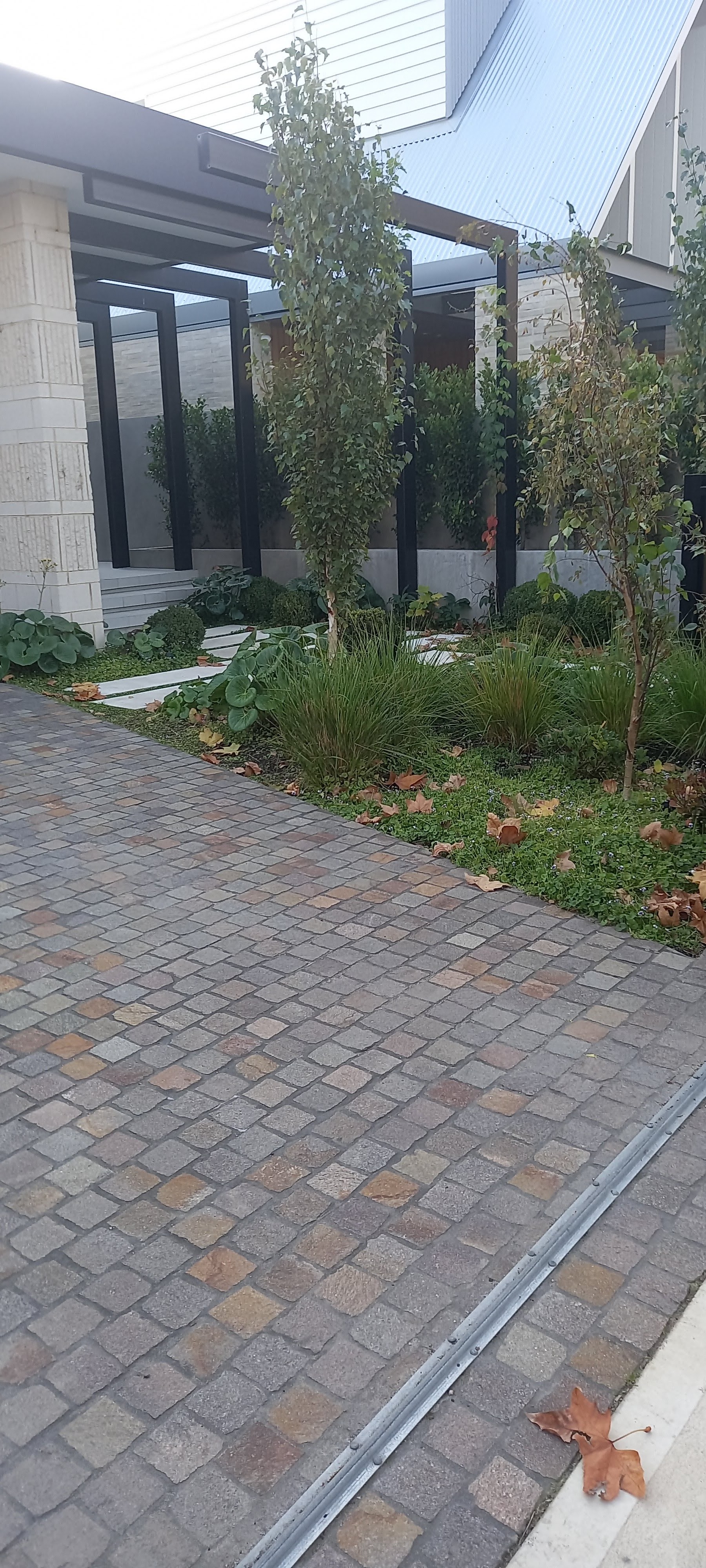
  • Cobblestone

    Small modules and textured faces suit heritage kerb appeal and slower vehicle speeds. Joints are numerous, so bedding and cleaning expectations should be discussed up front alongside driveway paving cost Melbourne allowances.
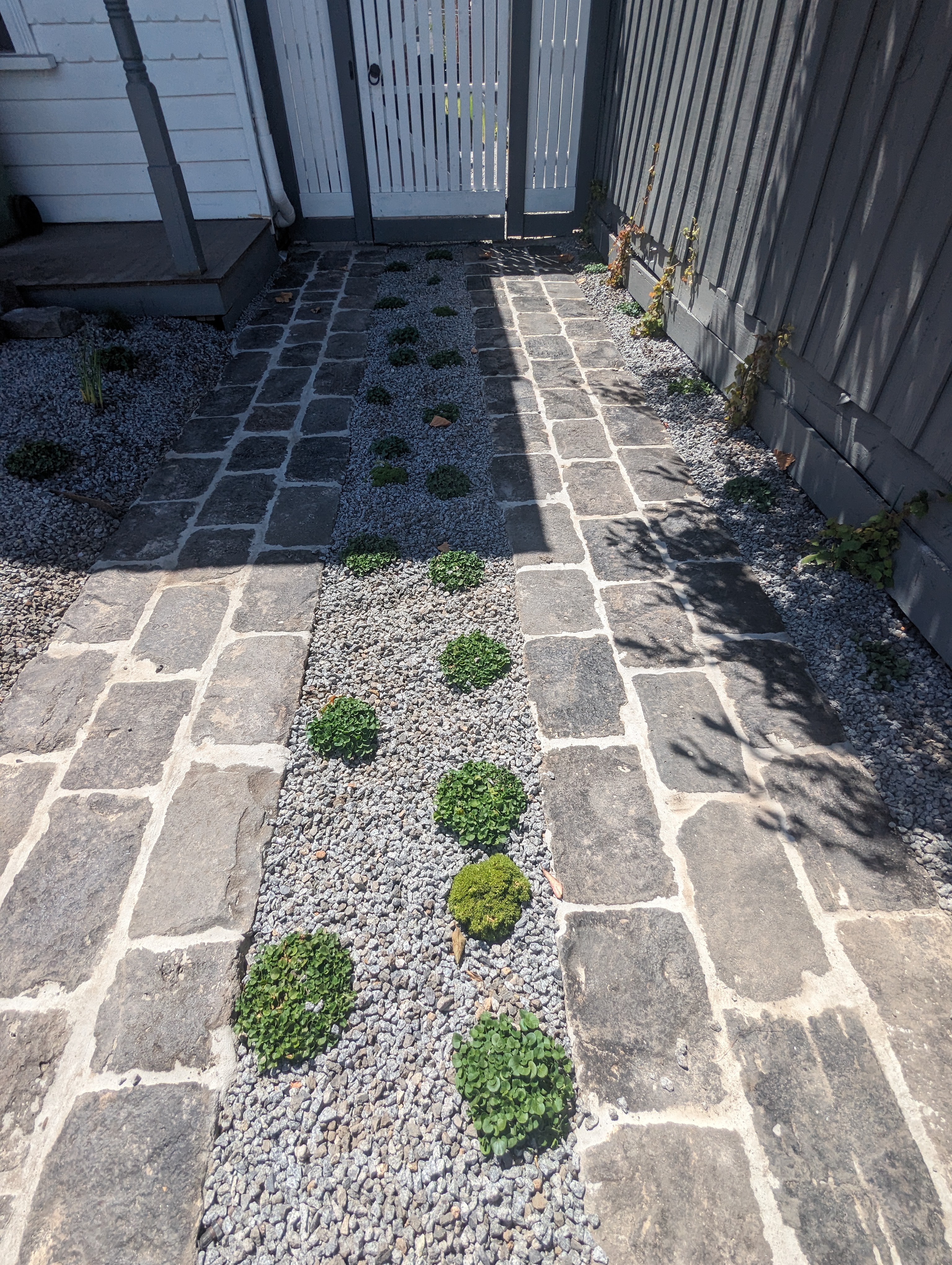
  • Large format stone

    Fewer joints and a cleaner plane suit architectural entries. Stone driveway paving at large sizes needs confident falls, careful handling and often more structural support at vehicle turning points than small-unit fields.

What affects driveway paving cost?

Driveway paving cost Melbourne homeowners compare should be read as a bundled scope: groundworks, materials, restraint and finishing—not a headline rate per square metre. For wider pricing context, see our paving cost Melbourne guide, then cross-check items below on your written quotes.

  • Area size Larger fields increase material and laying time; wide frontages add perimeter restraint and kerb metres.
  • Excavation depth Removing soft topsoil, rubble or failed concrete changes machine time, cartage and disposal.
  • Base preparation Sub-grade improvement, geotextile, crushed-rock depth and compaction are the invisible majority of a durable driveway.
  • Concrete base requirements Some sites specify slab-and-adhesive where loads, soils or falls demand a stiffer platform than sand bedding alone.
  • Paver or stone type Clay brick, concrete units and natural stone differ in supply cost, thickness rules and handling on site.
  • Drainage Surface falls, grated pits, soakage and ties to existing stormwater often decide whether the pavement stays serviceable in winter.
  • Kerbs and edging Aluminium profiles, concrete haunching or masonry kerbs are frequently essential line items, not decorative afterthoughts.
  • Vehicle type and use Family cars, SUVs with wide tyres and occasional van deliveries each suggest slightly different tracking and edge protection thinking.
  • Access Narrow side gates, steps, long barrow runs and protection of existing surfaces add labour hours every day of the job.

Estimate driveway paving cost

Why herringbone is common for driveways

Herringbone driveway paving is not mandatory, but it is popular for sensible reasons: the bond helps distribute steering forces across neighbouring units, and suppliers routinely stock rectangular modules that suit the pattern.

  • Interlocking strength — Short ends meet long faces in a woven field, so there is less temptation for courses to shift along a single weak line.
  • Load distribution — Tracking loads share across several pavers at once, which pairs well with correctly specified bedding.
  • Traditional driveway use — Melbourne streets and period homes often reference clay brick herringbone; the look signals “driveway” without shouting.
  • Works well with brick and rectangular pavers — Most brick driveway paving and concrete rectangular ranges are sized with herringbone set-out in mind.

Pattern choice does not replace thickness, falls or edge restraint. For layout detail and typical pitfalls, read herringbone paving Melbourne.

Common driveway paving mistakes

Most failures on a paved driveway Melbourne properties rely on are boring: water in the wrong place, edges that walk, or a base that was never built to carry what the garage already serves.

  • Weak base prep — Shallow excavation, under-compacted layers or wet fills telegraph as movement and ponding within a season or two.
  • Poor drainage — Flat spots against thresholds stain, heave joints and annoy everyone in waterproof shoes.
  • Inadequate edge restraint — Open sides to lawn or garden creep outwards under steering unless haunched or kerbed properly.
  • Wrong paver thickness — Footpath-rated units under regular vehicle use risk cracking and pumping no matter how attractive the colour.
  • Chasing appearance only — The right finish is important, but specifying from photographs without falls and structure usually ends in rework.
  • Ignoring vehicle loads — Briefs that skip the “who parks what here?” conversation often miss the specification step that keeps the pavement level.

Concrete base vs wet bed for driveways

Outdoor driveway paving often ends up on the more structural side of residential work: you are building a small pavement, not a thin veneer over whatever was there before.

A well-built crushed-rock bed with compliant sand bedding can serve many residential drives when soils are stable, falls are generous and product thickness matches wheel loads. Where reactive soils, tight levels to the garage slab or heavier use suggest otherwise, teams specify a concrete slab with adhesive bedding to stiffen the system.

Site conditions—not internet rules of thumb—should steer the decision. The same street can present different sub-grades front-to-back. For a balanced comparison, see wet bed vs concrete base paving.

Which driveway paving style suits your home?

Match module scale, joint colour and restraint detail to the architecture you already have. Driveways sit between fence lines, planting and the façade—so the pavement should agree with all three.

  • Heritage homes — Narrow brick or cobble-scale modules, softer joint tones and soldier borders often sit comfortably with weatherboards and tuckpointed chimneys.
  • Contemporary homes — Larger concrete or stone formats, tight joints and minimal border can read cleaner against flat eaves, steel and render.
  • Natural landscapes — Textured stone and slightly wider joints can bridge lawn, mulch and loose planting; falls still need to be disciplined at the garage.
  • Architectural homes — Consider axis: how the bond aligns with the front door, carport posts and feature walls matters as much as the catalogue swatch.
  • Fences, planting and façade materials — Repeat a colour cue from cladding or gate metal in restraint or header courses; keep planting clear of low spots that block drainage.

Frequently asked questions

What is the best paving style for driveways?
There is no single winner. Herringbone driveway paving is common because the bond interlocks and spreads load, but stretcher bond can work when units are thick enough, edges are restrained and the base matches vehicle use. Choose from specification first, appearance second.
Is driveway paving expensive?
Driveway paving cost Melbourne quotes reflect excavation, base depth, drainage, kerbs, access and whether you choose brick driveway paving, concrete modules or stone driveway paving—not just the visible top layer. Use the paving cost calculator for a guide bracket, then refine on site.
Does driveway paving need concrete underneath?
Not on every site, but many outdoor driveway paving specifications step up to a concrete slab and adhesive where wheel loads, poor soils or tight falls demand it. The correct build-up follows from engineering judgement and your brief—not a blanket rule.
Is herringbone better for driveways?
Often, yes, for rectangular units: the pattern interlocks and helps distribute tracking loads when bedding and edges are right. It is not a substitute for correct thickness or base work. Read the detail in our herringbone paving Melbourne guide.
Can natural stone be used on driveways?
Yes, when thickness, strength and slip resistance suit vehicle use and the installer matches stone driveway paving to a base designed for your ground conditions. Irregular crazy-style fields are usually slower and dearer; large format stone can look superb but needs careful set-out at turning points.

Planning a paved driveway project?

Use the calculator for a realistic guide range, then organise a site visit when you're ready to properly assess drainage, levels and material selection.

Estimate driveway paving cost