Melbourne paving · pattern notes
Herringbone Paving Melbourne
Herringbone lays rectangles so joints zig-zag instead of running in long straight lines. That helps spread wheel loads when bedding and edges match the job. Expect more border cuts than stretcher bond; you get structure and movement where cars turn or paths pinch.
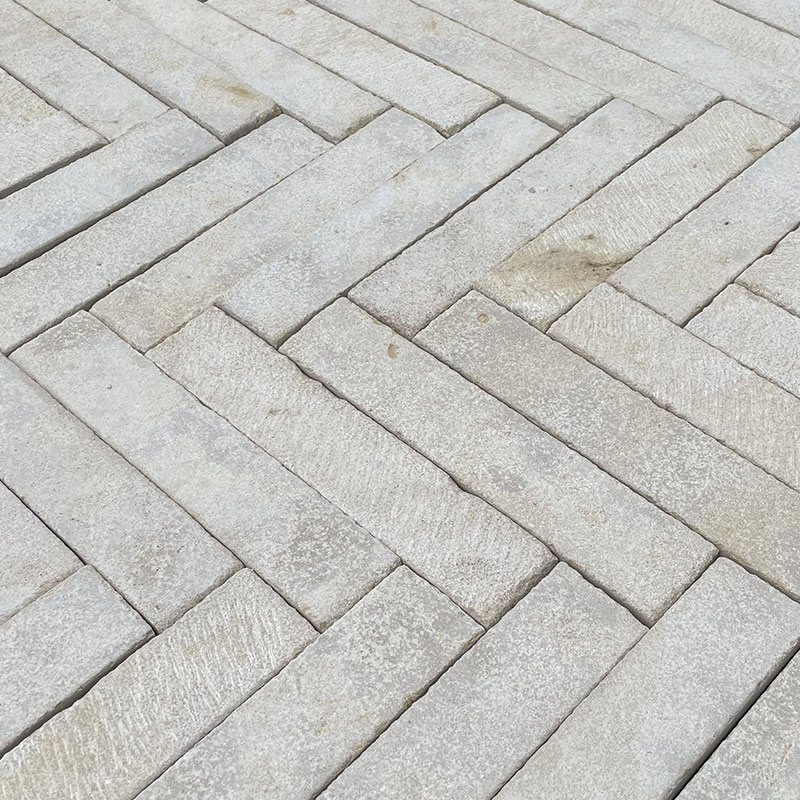
What is herringbone paving?
Herringbone paving sets rectangles at 45° or 90° to travel so joints interlock in a zig-zag. That’s why herringbone brick paving and herringbone pavers are common where the surface needs to hold up under foot or tyres.
Versus stretcher bond (offset rows), herringbone looks busier up close. There’s no single weak joint running the full length of the pavement. Brick, concrete units or rectangular stone all change the feel—heritage or quite crisp.
- Rectangular pavers at angles so short ends meet long faces in a repeating pattern
- Zig-zag joints that add movement across the paved area
- Often brick, clay, concrete or rectangular stone, depending on budget and house style
- Stronger than stretcher bond for many homes when detailed properly
- Suits cottage gardens and modern courtyards when colour, joint width and borders match the house
Where herringbone paving works best
It suits spaces where you want the paving to feel considered, not like a plain utility slab. Herringbone driveway paving is a common Melbourne brief when kerb appeal and wheel tracking matter; herringbone courtyard paving uses the same logic smaller.
- Driveways when paver thickness, bedding and edge restraint suit vehicles
- Courtyards and alfresco edges where a small module wraps seating, planters and level changes
- Side paths and strips that still deserve a tidy finish beside the house
- Garden paths between lawn, beds and entries without defaulting to a bland grid
- Entries, porch landings and steps where direction changes should read clearly
- Traditional homes and textured gardens where brick paving in Melbourne sits with weatherboards, brick or bluestone
What affects herringbone paving cost?
Herringbone paving cost in Melbourne depends on area, product, set-out and groundworks—not a generic rate per m². Use our paving cost calculator for a band, then narrow it on site once access, falls and use (foot vs vehicles) are clear. More context in our Melbourne paving cost guide.
- Area in m² Size drives material; perimeter shape drives cuts, soldier courses and how cleanly herringbone runs fit.
- Paver type and thickness Clay, concrete and stone differ in price, weight and fit for purpose—driveways need thickness and breaking loads matched to use, not just colour.
- Pattern set-out Herringbone needs a true start line and consistent direction; axis changes, panels or borders add dry lay and cutting versus one open field.
- Edge restraints and borders Haunching, kerbs or hidden edge profiles stop sideways creep; decorative borders often mean more perimeter cuts.
- Base preparation Dig depth, sub-grade fix and compaction underpin stability—especially over old concrete, fill or reactive soil.
- Drainage and fall Surface water must leave structures and thresholds; low spots and stains usually trace to falls, grates or clashes with existing levels.
- Site access Narrow side passages, steps or long barrow runs add labour and can limit how sand, pallets and spoil move.
- Driveway versus foot traffic Cars, turning circles and parking need thicker units, tighter spec and often stronger bedding than a path only—see our driveway paving Melbourne guide.
Strengths and trade-offs
Quick pros and cons before you lock herringbone on a driveway, path or courtyard.
Strengths
- Interlocking layout that shares load across neighbouring units
- Strong visual movement along paths and across larger areas
- Fits driveways when thickness, bedding and edges suit vehicles
- Works naturally with brick and rectangular stock sizes
- Timeless in traditional gardens; can still look sharp with modern detail
Trade-offs
- More set-out and alignment than stretcher bond on the same area
- Border cuts add labour where the pattern meets curves, steps or walls
- Poor alignment shows fast because the zig-zag rhythm breaks
- Material and joint colour strongly steer whether it feels refined or busy
- Very large open areas can look dense unless broken with borders, planting or scale change
Common paving mistakes
- Bad set-out from the first line — A few millimetres of drift early magnifies at boundaries, posts and doors.
- Weak edge restraint — Without solid haunching or kerb, vehicle areas can spread joints and lose level over time.
- Uneven border cuts — Tapered slivers and messy reveals look rushed and hold debris.
- Wrong thickness for driveways — Footpath-rated units under cars risk cracking, pumping and expensive fixes.
- Ignoring fall and drainage — Water must leave the paving and stay off walls, timber thresholds and lawn.
- Fighting the house style — Herringbone should support the architecture; wrong scale, joint colour or border width can throw the whole job.
When it helps to bring in Made By Mobbs
Herringbone looks simple on a mood board; on site it’s set-out, edge detail and the wider garden. Made By Mobbs Landscapes helps when you want that coordinated—how the bond meets the garage slab, where the axis runs from the path, how borders meet lawn, beds or deck steps.
For herringbone driveway paving, base spec and edge restraint matter as much as the brick or paver on top. If you’re comparing wet bed vs concrete base paving for vehicles, thickness, restraint and structure—not pattern alone—carry the load. We treat driveways as part of the landscape, not a thin skin over whatever was there.
Made By Mobbs designs and builds full outdoor areas rather than isolated paving. That matters when levels, drainage, planting and circulation all need to match the finished paving plane.
This page is general guidance. Real pricing needs your context—access, existing surfaces, services, traffic and how new work ties into the garden—before anyone should promise a fixed figure.
Questions we hear on site
- Is herringbone paving expensive?
- Rarely the cheapest layout per m²—cutting, alignment and borders take longer than basic stretcher bond. Product, edges and whether cars use the area move herringbone paving cost in Melbourne more than the pattern name—start with the calculator, then confirm on site.
- Is herringbone paving good for driveways?
- Yes, when pavers meet thickness and strength for wheel loads, bedding is to spec and edges are restrained. Interlock helps; spec still has to match use.
- What materials work best for herringbone paving?
- Clay brick and concrete rectangles are the everyday options; natural stone works when sizes stay consistent enough for readable joints. Best pick follows sun, cleaning, vehicle use if any, and how it sits with façade and garden.
- Is herringbone paving old-fashioned?
- Traditional, but not dated by default. Narrow bricks and softer joints read classic; larger concrete units with tight joints can read modern. Execution and context beat the label.
- Is herringbone harder to lay than stretcher bond?
- Routine for experienced installers; slower for DIY because bond lines must stay true and border cuts need planning. Most homeowners hire a crew once they see how visible small errors are in a zig-zag field.
Drainage, ground movement and vehicle loads decide how long paving lasts—the word “herringbone” doesn’t.
Planning a herringbone paving project?
Rough-cost the job with realistic inputs, then walk the site when you’re ready to lock base spec, set-out and falls—not just paver colour.
Estimate Herringbone Paving Cost