Melbourne · pattern comparison
Crazy Paving vs French Pattern
One layout is fitted piece by piece; the other needs its mixed-size repeat to stay true. Stone tier and access matter—but laying time, waste and drainage usually decide between these two before colour does.
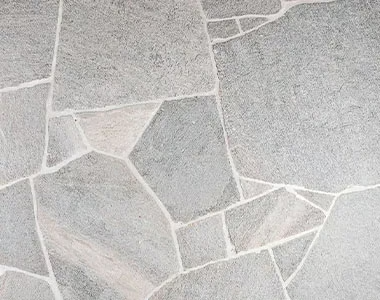
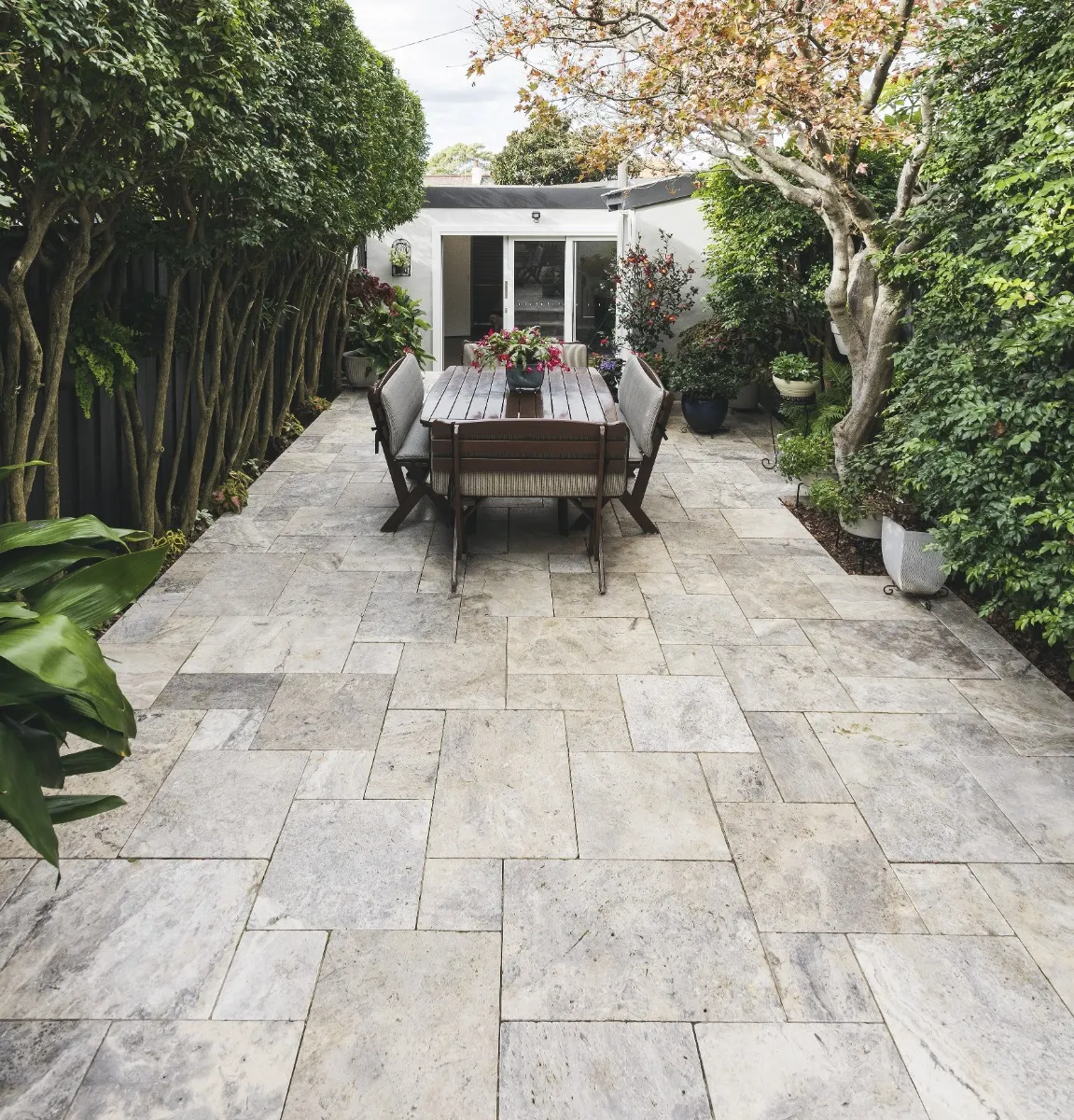
At a glance: organic vs modular
Use this table as a shorthand when comparing French pattern paving vs crazy paving for the same brief. It is not a substitute for set-out on site, but it helps align expectations before you speak with a contractor about crazy paving vs French pattern in Melbourne conditions—access, fall and stone availability included.
| Factor | Crazy paving | French pattern |
|---|---|---|
| Visual style | Irregular pieces and wandering joints; strong texture and movement across the field. | Repeating modular sizes; steady repeat that still breaks up a plain grid. |
| Best suited to | Garden paths, intimate courtyards and feature pockets where planting leads the design. | Larger entertaining slabs, pool surrounds and architecture-led outdoor rooms with clear geometry. |
| Cost tendency | Often driven by laying time: fitting, trimming and consistent jointing are slow. | Modular packs and careful set-out; perimeter cuts and pattern repeats can add waste. |
| Labour complexity | High craft load per square metre—each stone is handled repeatedly. | Demanding alignment: small early errors compound across the field. |
| Formality | Reads relaxed and organic; suits less formal garden languages. | Reads more structured without feeling as rigid as single-size paving. |
| Pool suitability | Possible when slip rating, falls, drainage and coping detail suit wet use—less common as a default. | Frequently specified around pools when modules, coping lines and certifier rules align. |
| Maintenance considerations | Joint width and debris control matter; sealing depends on stone and exposure. | Joint discipline and cleaning routines show quickly; sealing choices follow stone type. |
| Design risk | Poor bedding or inconsistent joints look unintentional rather than “rustic”. | Drift in the repeat or mixed batches reads as a layout mistake, not character. |
How they differ on site
Crazy paving is irregular, organic and typically reads as the more hand-laid of the two. French pattern is modular and structured: a fixed repeat of several sizes that still feels softer than a single paver size, but the eye picks up the order.
Neither approach is automatically better. The right choice depends on the house, surrounding materials, how you use the space and whether the garden needs a calm floor plane or a more textured, naturalistic surface.
When crazy paving earns the slower lay
Choose crazy paving when the brief rewards irregularity rather than fighting it—especially where paths curve through planting or the pavement sits visually close to loose, naturalistic beds.
- Organic garden paths that tie circulation to planting
- Textured courtyard areas where you want the floor to feel less “installed”
- Feature zones near planting where stone echo helps link hard and soft landscape
- Less formal garden styles and smaller-scale outdoor rooms
- Heritage or relaxed natural landscapes where rigid modular lines would feel out of character
When French pattern is worth the set-out
French pattern comes into its own where there is enough area to run full repeats and where the architecture or pool geometry benefits from a legible, controlled field.
- Pool surrounds, subject to slip rating, falls, coping junctions and certification detail
- Larger entertaining areas and outdoor dining slabs that need a single clear paving language
- Structured patios where furniture groups align with modular lines
- Mediterranean-inspired spaces using travertine or limestone tonal ranges
- Homes where a more regular pattern suits the façade, eaves lines or internal floor transitions
What drives cost between the two
Both options are more involved than simple stretcher-bond paving with one repeated unit. Crazy paving is labour-intensive because irregular pieces must be bedded consistently and jointed without the field looking accidental. French pattern requires careful modular set-out from the first repeat and can carry material waste where edges, steps or cut-outs do not suit the module.
In real Melbourne quotes, site preparation, drainage, access constraints and stone selection often move the price more than the label on the pattern. Compare like-for-like scope—not just square metres—before drawing a firm conclusion. For a broader read on how paving prices are built, see our paving cost guide.
Living with each layout
- Joint consistency — readable joints make both styles look intentional; wandering widths read as poor workmanship.
- Cleaning — plan for leaf litter, pool chemistry and outdoor dining spills; wider joints on crazy work can need more attention.
- Sealing where appropriate — follow stone supplier guidance; wet areas and light-toned limestones are sensitive to wrong product choices.
- Slip resistance — select finish and stone for how the area is used, including damp shade and bare feet.
- Drainage and falls — surface water must leave the pavement cleanly; low spots stain and worry pool certifiers.
- Relationship to planting, edging, coping and levels — thresholds, grate positions and lawn interfaces should be resolved before stone is ordered.
How Made By Mobbs chooses between them
We stay pattern-agnostic until context is clear. For organic garden spaces and path-led gardens, crazy paving often integrates more convincingly with planting and looser forms. For larger entertaining areas and many pool surrounds, French pattern often delivers a more controlled floor plane that sits comfortably beside coping, fencing and architecture.
The final decision should be made with the whole landscape in view—levels, drainage, movement lines and materials—not from a single photograph or mood board in isolation.
Questions homeowners ask mid-comparison
- Is crazy paving cheaper than French pattern?
- Neither is automatically cheaper in Melbourne. Crazy paving is slow to lay because each piece is selected, trimmed and jointed; French pattern needs disciplined modular set-out and can create offcuts depending on the perimeter. Site preparation, drainage, stone grade and access often move the total more than the pattern name alone—run both options through the calculator before you assume a winner.
- Which style is better around pools?
- French pattern is often chosen for pool surrounds because the modular field reads controlled and can align cleanly with coping lines—but slip rating, falls, stone thickness and your certifier’s requirements still decide suitability. Crazy paving can work when joints, drainage detail and stone choice are resolved for wet use; it is less common where bare feet, strict geometry and long straight rebates are priorities.
- Which paving style looks more natural?
- Crazy paving usually reads as more organic because the layout is irregular and the joints follow the stone edges. French pattern still uses natural stone with tonal variation, but the repeat is structured, so it tends to feel more ordered from a distance. “Natural” is subjective and should be weighed against your architecture, planting and how formal the space should feel.
- Does French pattern paving date?
- Modular natural stone layouts have a long pedigree; projects date when detailing is careless, stone colour follows a short-lived trend, or falls and joints are neglected. Neutral stone, consistent joints and well-managed drainage tend to age calmly—whether the pattern is French or irregular.
- Can Made By Mobbs help choose between the two?
- Yes. We review levels, drainage paths, how you move through the garden, planting, edging and the relationship to the house before shortlisting finishes. The aim is a coherent landscape design rather than picking from a single reference photograph.
Same stone tier can land differently depending on cuts, perimeter detail and how water leaves the area.
Still weighing crazy against French pattern?
Run both layouts through the calculator with honest labour expectations, then confirm access and drainage before you lock stone.
Use the paving cost calculator